September.
Early fall · Zone 6b · Hunterdon County, NJ
“September blow soft, till fruit's in the loft.”
Old farmer’s saying
- Sun ↑
- 6:35
- Sun ↓
- 7:05
- Day
- 12h 30m
- High
- 78°
- Low
- 57°
- Moon
- Harvest Moon
Autumnal equinox · Sep 22
Peak fall harvest and transition. Watch for the first frost mid-to-late month. Fall bulb planting begins. Asters and Sedum carry the border.

General chores.
September is the transition. Days are shortening; nights are cooling; the first frost is somewhere in the second half of October. The garden is still generous — tomatoes, peppers, apples, pumpkins — but every task now is about closing gracefully. What you preserve in September, you eat in February.
“Watch frost forecasts starting mid-to-late month.”
Rare but possible: a mid-September frost catches gardeners off guard. Watch the 10-day forecast starting the 15th. Cover beds on frost nights or harvest anything vulnerable.
Bring the harvest in
Save seeds from self-pollinating flowers
Marigolds, cosmos, sunflowers, zinnias — dry seed heads on the plant, then collect, label, and store in glass jars. Free plants next spring.
Pot up herbs to bring indoors
Basil, parsley, and thyme in pots on a bright windowsill extend the fresh-herb season through winter. Basil is short-lived indoors; parsley and thyme go months.
Bring houseplants back inside
Blast every plant with the hose to knock off aphids and spider mites before they come in. Skip this and you'll be dealing with an infestation by December.
The Persephone deadline
Anything you want to eat in December must be near-mature by November 20
After Nov 20, daylight in Hunterdon drops below 10 hours a day and plant growth virtually stops. The fall crops don't die; they hold at whatever size they've reached. Cover them and you're 'storing them in the garden.' Miss the mid-November target and you're growing them for spring — see the Fall Garden Planning guide for the full framework.
Drop row cover on the first frost warning
Row cover installed over the low tunnel hoops in August pays off now. Semi-hardy crops (lettuce, chard, broccoli) get another 3–4 weeks under Agribon-19. Hardy crops (kale, spinach, mâche) go into December.
Last-chance direct sow: greens only, before September 15
Anything sown after mid-September has to be a fast-growing cold-hardy green — arugula, spinach, mâche, tatsoi, mizuna. Everything else needs more time than the sun will give it.
Building for next year
Top up beds with compost
Every year takes a little out of the soil. Every year, a topdressing of compost puts a little back. Do this now so it works in over winter.
Divide spring-flowering perennials
Peonies, iris, phlox — anything that blooms in spring or early summer gets divided in fall. Fall bloomers wait until spring.
Get cover crops in by mid-month
Winter rye and hairy vetch protect empty beds through winter and add nitrogen back to the soil. Sow no later than the 20th so the seed germinates before it gets too cold.
Plant new trees and shrubs
Cool air, warm soil, autumn rains — the perfect trifecta for root establishment. Plant now and by spring the tree is already settled.
Plant grass seed
September is the best month of the year to seed a lawn. Cooler days, warm soil, less crabgrass pressure. Water lightly and daily until germination.

Plant & sow.
What can go in the ground now — and what still needs to wait. Start dates for indoor sowing, direct sowing, and transplanting, broken out by vegetables, herbs, and flowers.
“Leaf lettuce ('Winter Density'), Swiss chard, spinach ('Winter Bloomsdale' for overwintering).”
Vegetables — direct sow outdoors (before Sept 15)
Radishes (fast, 30 days)
Bok choy — 45 days, fine before Sept 15
Cold-hardy specialty greens — sow all month, harvest all winter under cover
Mâche, claytonia, tatsoi, mizuna, minutina, sylvetta arugula
These are the crops that actually work through December and January under row cover
Vegetables — plant late September through October
Garlic — hardneck ('Music', 'German Extra Hardy') mid-Oct to mid-Nov; softneck ('Inchelium Red') slightly later
Flowers — plant now
Spring-flowering bulbs: tulips, daffodils, alliums, hyacinths
Biennials: foxglove, hollyhock (sow outdoors)
Collect seeds from annuals and perennials
Cut back spent summer perennials; leave seed heads on asters, sunflowers, cosmos for birds
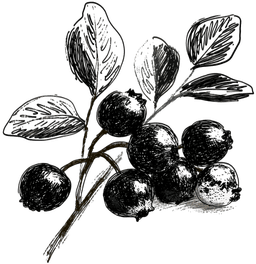
Orchard & berries.
The orchard and the berry patch keep their own calendar. Apples, pears, peaches, brambles, blueberries, and grapes — pruning, spraying, planting, and harvest, in the rhythm they ask for.
“Apples (Liberty, Jonafree, Enterprise, many mid-season varieties) — peak.”
Pears (Bartlett, Bosc)
Asian pears (Warren, Shinko, Korean Giant)
Grapes (August through October)
Raspberries (fall-bearing) continuing
Apply milky spore or predator nematodes for Japanese beetle control
Watch for borer damage on peach and cherry trunks
By the middle of the month, the sun sets at 7:05 — the day still stretched wide, but shortening a minute at a time.
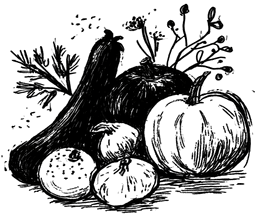
Harvest.
What's in season this month, roughly in the order it arrives at the kitchen door. Some crops are past peak by the last week; others are just beginning.
- Potatoes (dig and cure)
- Onions (cure and store)
- Winter squash (harvest before first frost)
- Pumpkins (harvest before first frost)
- Tomatoes (pick green ones before frost; ripen indoors on windowsill)
- Peppers, eggplant, beans (before hard frost)
- Sweet potatoes (late September–October)
- Broccoli, cabbage, kale (fall planting harvest; flavor improved by light frost)
- Beets, carrots, radishes, turnips (fall plantings)
- Brussels sprouts (sweeten after frost)
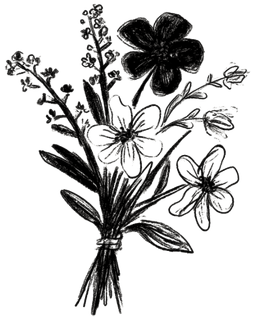
In bloom.
What's open in the beds and borders now — for the vase, for the pollinators, for the view from the porch.
The month’s palette
Sedum (Autumn Joy).
deep rose/rusty pink, very reliable fall bloomer
Aster
classic fall daisy, purple, pink, white
Anemone (Japanese)
elegant late-season blooms
Chelone (turtlehead)
pink blooms in moist areas
Rudbeckia continuing through September
Russian sage continuing in full sun
Helenium (sneezeweed)
yellow daisy-type flowers
Eupatorium (Joe-Pye Weed / hardy ageratum) continues
The harvest moon lifts over the ridge — a full month has almost turned.
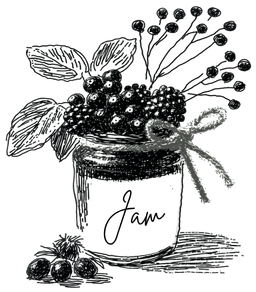
Can & preserve.
What to put by while it's here — canned, frozen, fermented, or dried. Pressure-can low-acid vegetables; water-bath the high-acid ones. Freezer and dehydrator for everything in between.
“Apple butter, applesauce, apple pie filling, apple cider.”
Pickled cucumbers and onions
Canned corn, corn relish (last of season)
Apple and pear sauce, canned pears
Grape jelly, grape juice
Pumpkin puree (freeze or pressure can)
Sweet potato pie filling — can or freeze
Fall greens (kale, collards) — freeze or can
Late tomatoes: continue sauces, pastes, salsas
Root vegetables (beets, carrots) — pressure can or store in root cellar
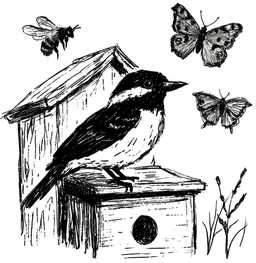
For the wildlife.
Native plants in bloom in the beds and borders this month — and what they attract. From the Field Guide.
- EpNative · NJ
Purple Coneflower
Echinacea purpurea
The classic pink-purple prairie daisy with a raised copper-brown center. Blooms for months in the height of summer and holds up in a vase or…
- Type
- Perennial flower
- Bloom
- Jun–Sep
- SnNative · NJ
New England Aster
Symphyotrichum novae-angliae
The tall violet-pink daisy that ends the season. Blooms when almost nothing else is blooming, on stiff dark stems that stand up to fall wind…
- Type
- Perennial flower
- Bloom
- Sep–Oct
- SrNative · NJ
Wrinkleleaf Goldenrod
Solidago rugosa
The workhorse goldenrod. Arching plumes of tiny yellow flowers open on tall stems in late summer and feed more species of pollinator than al…
- Type
- Perennial flower
- Bloom
- Aug–Oct
- EfNative · NJ
Joe-Pye Weed
Eutrochium fistulosum
The gentle giant — 7 feet of dusky mauve flower clusters held above whorled leaves, humming with swallowtails for a solid month of late summ…
- Type
- Perennial flower
- Bloom
- Jul–Sep
- LcNative · NJ
Cardinal Flower
Lobelia cardinalis
The reddest red in the native palette. Vertical spikes of brilliant scarlet blossoms shaped precisely for a hummingbird's beak — plant it an…
- Type
- Perennial flower
- Bloom
- Jul–Sep
- PmNative · NJ
Mountain Mint (Short-toothed)
Pycnanthemum muticum
Silvery-green bracts flare around clusters of tiny pale-lavender flowers, making the whole plant look frosted from a distance. Xerces Societ…
- Type
- Perennial flower
- Bloom
- Jul–Sep
Coming next
October
Watch weather forecasts; cover beds on frost nights with row cover
Harvest all frost-sensitive crops before hard freeze: beans, eggplant, peppers, tomatoes
Clean up diseased plants from vegetable garden entirely — do not compost
Look ahead →
Just past
August
Keep up on harvests — especially squash and zucchini (pick every 1–2 days)
Continue weeding before weeds go to seed
Remove old plants that have stopped producing
← Look back
More on the almanac.
- T
Transplanting week, and everything at once.
The greenhouse is empty, the beds are full, and I have exactly three days before rain. The cold-season crops go in.
- T
The seed order comes in.
A cold Saturday, a stack of catalogs, and the annual argument with myself about how many tomato varieties is too many.