February.
Winter · Zone 6b · Hunterdon County, NJ
“February, if fair, brings foul weather in its wake.”
Old farmer’s saying
- Sun ↑
- 6:50
- Sun ↓
- 5:35
- Day
- 10h 45m
- High
- 42°
- Low
- 24°
- Moon
- Snow Moon
Light returning
Prep month. First seeds indoors — onions, leeks, celery, and long-germinating flowers. Dormant pruning on fruit trees.

General chores.
February is the pivot. The first seeds go in on Feb 1 — onions, leeks, celery — which means the season has effectively started even though the ground is still frozen. And every fruit tree in the yard needs to be pruned this month while it's still dormant. Small windows, but the biggest structural work of the year happens now.
“Finalize garden plans and seed orders.”
Any variety you haven't ordered by mid-February will probably be sold out or backordered. Do this by the 15th.
The seeds start now
Set up the indoor seed-starting station
Lights lowered to two inches above the flats, heat mat under, timer set to 14 hours. This should be running before you sow, not after.
Sanitize last year's pots and trays
A 10% bleach dip prevents damping-off — the fungal disease that wipes out seedlings overnight. Ten minutes, gloves, done.
Consider building a cold frame
A simple straw-bale cold frame gets lettuce and spinach three weeks earlier in spring and three weeks later in fall. If you've never had one, February is when to build it.
Pruning while it's still dormant
Prune apple and pear trees
Dormant pruning shapes the tree for the year. Take no more than 25–30% at a time. Cut for structure — open center or central leader — not for tidiness.
Prune cherry and plum trees
Stone fruits get pruned earlier than peaches because they're more resistant to open-wound disease. Do them mid-February.
Spray dormant oil on fruit trees
One application smothers overwintering scale, mites, and aphid eggs. Do it on a day above 40°F with no rain in the forecast for 24 hours.
Mow or prune the raspberry patch
For summer-bearers, cut fruited canes to the ground and leave new ones. For everbearers, mow the whole patch to 4 inches — you get one big fall crop instead of two smaller ones.
Prune peaches at the very end of the month
Peaches wait because they're the most disease-prone. Once hard freezes are past, take up to 40% of last year's growth.
Indoor housekeeping
Give tools a thorough cleaning and sharpening
Repeat what you didn't finish in January. Wire brush, mineral-oil rag on the metal, sanded and linseed-oiled handles.
Fertilize houseplants as days lengthen
The plants know the sun is coming back. Half-strength liquid fertilizer every other week from mid-February through October, then stop.

Plant & sow.
What can go in the ground now — and what still needs to wait. Start dates for indoor sowing, direct sowing, and transplanting, broken out by vegetables, herbs, and flowers.
“Onions (from seed): Feb 1–15.”
Vegetables — start indoors
Leeks: Feb 10–20
Celery: mid-to-late February
Broccoli, cabbage, cauliflower, Brussels sprouts: early February
Head lettuce, parsley: by end of month
Tomatoes, peppers, eggplant: start by end of February for longest season
Herbs — start indoors
Rosemary, snapdragons, begonias: long germination; start by end of month
Parsley, thyme, oregano: late February
Flowers — start indoors
Slow-growing annuals (pansies, petunias, snapdragons): late February
Most perennial flowers should be started inside by end of month
Begonias: start now for longest season
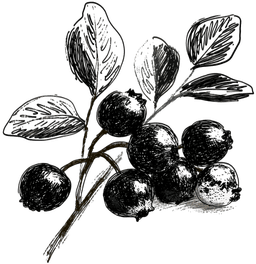
Orchard & berries.
The orchard and the berry patch keep their own calendar. Apples, pears, peaches, brambles, blueberries, and grapes — pruning, spraying, planting, and harvest, in the rhythm they ask for.
“Continue dormant pruning of fruit trees.”
Prune grapes hard while dormant
Fertilize grapes, raspberries, and blueberries before growth resumes

Can & preserve.
What to put by while it's here — canned, frozen, fermented, or dried. Pressure-can low-acid vegetables; water-bath the high-acid ones. Freezer and dehydrator for everything in between.
“Pickled onions, turnips, sweet potatoes — winter root vegetables in storage.”
Check pantry stores; use any questionable preserved goods
Coming next
March
Prune fruit trees and berry bushes if not done in February — complete before spring growth begins
Turn compost pile on warmer days; resist working wet soil (compaction risk)
Clean up dried debris from beds; add to compost
Look ahead →
Just past
January
Review last year's notes, yields, and variety performance
Map out crop rotation plan for the new season
Order seeds early — popular varieties sell out fast; prioritize heirloom and open-pollinated
← Look back
More on the almanac.
- T
Transplanting week, and everything at once.
The greenhouse is empty, the beds are full, and I have exactly three days before rain. The cold-season crops go in.
- T
The seed order comes in.
A cold Saturday, a stack of catalogs, and the annual argument with myself about how many tomato varieties is too many.