June.
Early summer · Zone 6b · Hunterdon County, NJ
“Rain in June sets everything in tune.”
Old farmer’s saying
- Sun ↑
- 5:25
- Sun ↓
- 8:30
- Day
- 15h 05m
- High
- 82°
- Low
- 60°
- Moon
- Strawberry Moon
Summer solstice · Jun 21
Maintenance, succession sowing, and the first big harvests. All warm-season crops in the ground. Iris and daylilies open.

General chores.
June is the maintenance month, and maintenance is where gardens are won or lost. Every bed is full; every plant is growing fast; every weed and pest is in the same race you are. The trick is keeping up: 30 minutes a day, three or four days a week, beats a whole Saturday of catching up.
“Water deeply, once a week.”
One deep watering (an inch, all the way through the root zone) beats three shallow ones. Shallow watering keeps roots at the surface, where they cook in July heat.
Every bed is full — now defend it
Weed while weeds are small
A weed at 3 inches pulls out with one finger. The same weed at 8 inches needs a hoe, and it's already stolen water and light from the crop next to it. Weed weekly, small.
Stay out of the garden when leaves are wet
Fungal spores travel on water and shoes. Walk through a wet tomato patch and you spread early blight to every plant you brush. Wait until leaves dry before working.
Get last warm-crop transplants in the ground
Late tomato and eggplant transplants, direct-sown beans and squash for succession — this is your last window to plant with enough season left to mature.
Getting ahead of pests
Watch for beetles: potato, cucumber, squash vine borer, Mexican bean
The first ten beetles you see is the moment to act. Hand-pick them into a jar of soapy water, or spot-treat with neem or spinosad. Don't wait for damage — by then you're behind.
Cover brassicas with floating row cover
Cabbage moths lay eggs on any exposed brassica leaf; the caterpillars can strip a broccoli plant to ribs in a week. Row cover from planting through harvest is easier than picking caterpillars.
Managing the fruit and flowers
Begin softwood cuttings of shrubs
In June, current-year growth is soft and green — the perfect stage to root cuttings. Take 6-inch tips of spirea, lilac, or viburnum, dip in rooting hormone, and stick in damp perlite.
Thin fruit on peaches and apples
A peach tree that sets 200 fruits gives you 200 tiny peaches. Thin to one fruit every 6 inches; the tree pours the same energy into fewer, bigger, better fruits.
Divide bearded irises after bloom
June is the transplant window. Dig, split the rhizomes, discard soft or diseased pieces, and replant with the tops just at the soil surface.

Plant & sow.
What can go in the ground now — and what still needs to wait. Start dates for indoor sowing, direct sowing, and transplanting, broken out by vegetables, herbs, and flowers.
“Beans (every 2 weeks for continuous harvest).”
Vegetables — succession sow outdoors
Carrots, beets, radishes, lettuce, cucumber, squash
Rutabaga (direct sow June)
Pull bolted lettuce, spinach, radishes and replace with warm-season crops
Vegetables — transplant outdoors (last call)
Tomatoes, eggplant, cabbage, broccoli, cauliflower, kale, Swiss chard
Flowers — direct sow / transplant
Transplant all biennial and annual flowers outdoors
Direct sow corn, beans, carrots, beets, rutabaga, cucumber, squash
Deadhead spent blooms regularly to encourage reblooming
Stake tall growers
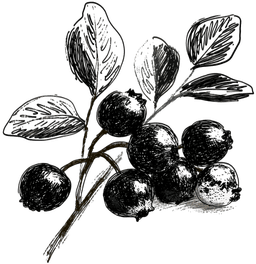
Orchard & berries.
The orchard and the berry patch keep their own calendar. Apples, pears, peaches, brambles, blueberries, and grapes — pruning, spraying, planting, and harvest, in the rhythm they ask for.
“Strawberries — peak season continues through June.”
Cherries — harvest serviceberries, early cherries (mid-June)
Early peaches (Harrow Diamond and similar): late June
Watch for fire blight on apples, pears, Asian pears — prune 6" below infection
Remove brown rot in stone fruits; spray sulfur as needed
Begin harvest of Natchez blackberries
Prune out old raspberry canes after harvest; leave 3–4 young canes per foot
By the solstice, the days are as long as they'll ever be. Everything after this is dusk creeping earlier.

Harvest.
What's in season this month, roughly in the order it arrives at the kitchen door. Some crops are past peak by the last week; others are just beginning.
- Asparagus (late spring, winding down early June)
- Peas, snow peas, snap peas
- Lettuce, spinach, radishes, arugula, spring greens
- Broccoli, cabbage (spring plantings)
- Rhubarb (continuing)
- Strawberries (peak)
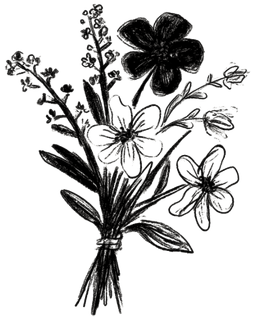
In bloom.
What's open in the beds and borders now — for the vase, for the pollinators, for the view from the porch.
The month’s palette
Iris (bearded).
peak bloom
Coreopsis (tickseed)
long-blooming yellow flowers begin
Daylilies
beginning to open (many varieties bloom June–July)
Yarrow
full bloom in sunny borders
Salvia
blue spikes in full sun
Columbine
continuing
Oriental poppies
peak
Alliums
continuing or finishing
Lavender
beginning to bloom (late June)
The strawberry moon lifts over the ridge — a full month has almost turned.
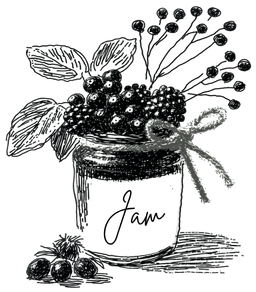
Can & preserve.
What to put by while it's here — canned, frozen, fermented, or dried. Pressure-can low-acid vegetables; water-bath the high-acid ones. Freezer and dehydrator for everything in between.
“Strawberry jam, strawberry preserves, pie filling — prime strawberry season.”
Freeze strawberries for smoothies and baking
Dilly beans (green beans start coming in)
Pickled asparagus (last of the season)
Mint syrup for drinks and desserts
New potatoes: use fresh; not yet for preserving
Summer squash/zucchini relish if early varieties are ready
Freeze early peas (blanch first)
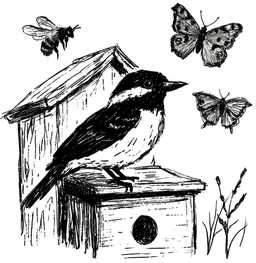
For the wildlife.
Native plants in bloom in the beds and borders this month — and what they attract. From the Field Guide.
- AtNative · NJ
Butterfly Milkweed
Asclepias tuberosa
The orange one. A dry-meadow milkweed with clusters of small vivid blooms that hold a huge diversity of pollinators through the hot months.…
- Type
- Perennial flower
- Bloom
- Jun–Aug
- EpNative · NJ
Purple Coneflower
Echinacea purpurea
The classic pink-purple prairie daisy with a raised copper-brown center. Blooms for months in the height of summer and holds up in a vase or…
- Type
- Perennial flower
- Bloom
- Jun–Sep
- AiNative · NJ
Swamp Milkweed
Asclepias incarnata
The pink milkweed. A tidy, upright plant that stays where you plant it — no aggressive runners like Common Milkweed — with clusters of small…
- Type
- Perennial flower
- Bloom
- Jun–Aug
- MfNative · NJ
Wild Bergamot
Monarda fistulosa
The lavender bee balm — cousin of the garden Monarda but tougher, drier, and more disease-resistant. Whorled tufts of dusty-lavender bloom o…
- Type
- Perennial flower
- Bloom
- Jun–Aug
- AcNative · NJ
Wild Columbine
Aquilegia canadensis
Nodding red-and-yellow lantern flowers on wiry stems that dance in every breeze. Blooms in April and May when the woodland edge has almost n…
- Type
- Perennial flower
- Bloom
- Apr–Jun
- ZaNative · NJ
Golden Alexander
Zizia aurea
Flat yellow umbels — the shape of dill flowers but earlier and more compact — hovering above shiny divided leaves. Blooms in that awkward la…
- Type
- Perennial flower
- Bloom
- Apr–Jun
- CaNative · NJ
New Jersey Tea
Ceanothus americanus
Small mound-forming shrub covered in frothy white flower clusters in early summer. The leaves were dried and brewed as a tea substitute duri…
- Type
- Shrub
- Bloom
- Jun–Jul
- CoNative · NJ
Buttonbush
Cephalanthus occidentalis
The pom-pom shrub. Perfectly spherical white flower heads — like small sputniks or crystal ornaments — open all summer long, held above dark…
- Type
- Shrub
- Bloom
- Jun–Aug
- VdNative · NJ
Arrowwood Viburnum
Viburnum dentatum
Multi-trunked native shrub with flat-topped clusters of small white flowers in late spring, followed by clusters of dark blue-black berries…
- Type
- Shrub
- Bloom
- May–Jun
Coming next
July
Harvest regularly — letting produce rot on the vine reduces plant productivity
Water early morning or late evening to reduce evaporation
Fertilize tomatoes and peppers lightly as they load up with fruit
Look ahead →
Just past
May
Last frost date: ~May 5–11. Do not transplant frost-sensitive crops before this
Apply fertilizer to vegetable garden as season launches
Mulch beds to prevent weeds and retain moisture
← Look back
More on the almanac.
- T
Transplanting week, and everything at once.
The greenhouse is empty, the beds are full, and I have exactly three days before rain. The cold-season crops go in.
- T
The seed order comes in.
A cold Saturday, a stack of catalogs, and the annual argument with myself about how many tomato varieties is too many.